
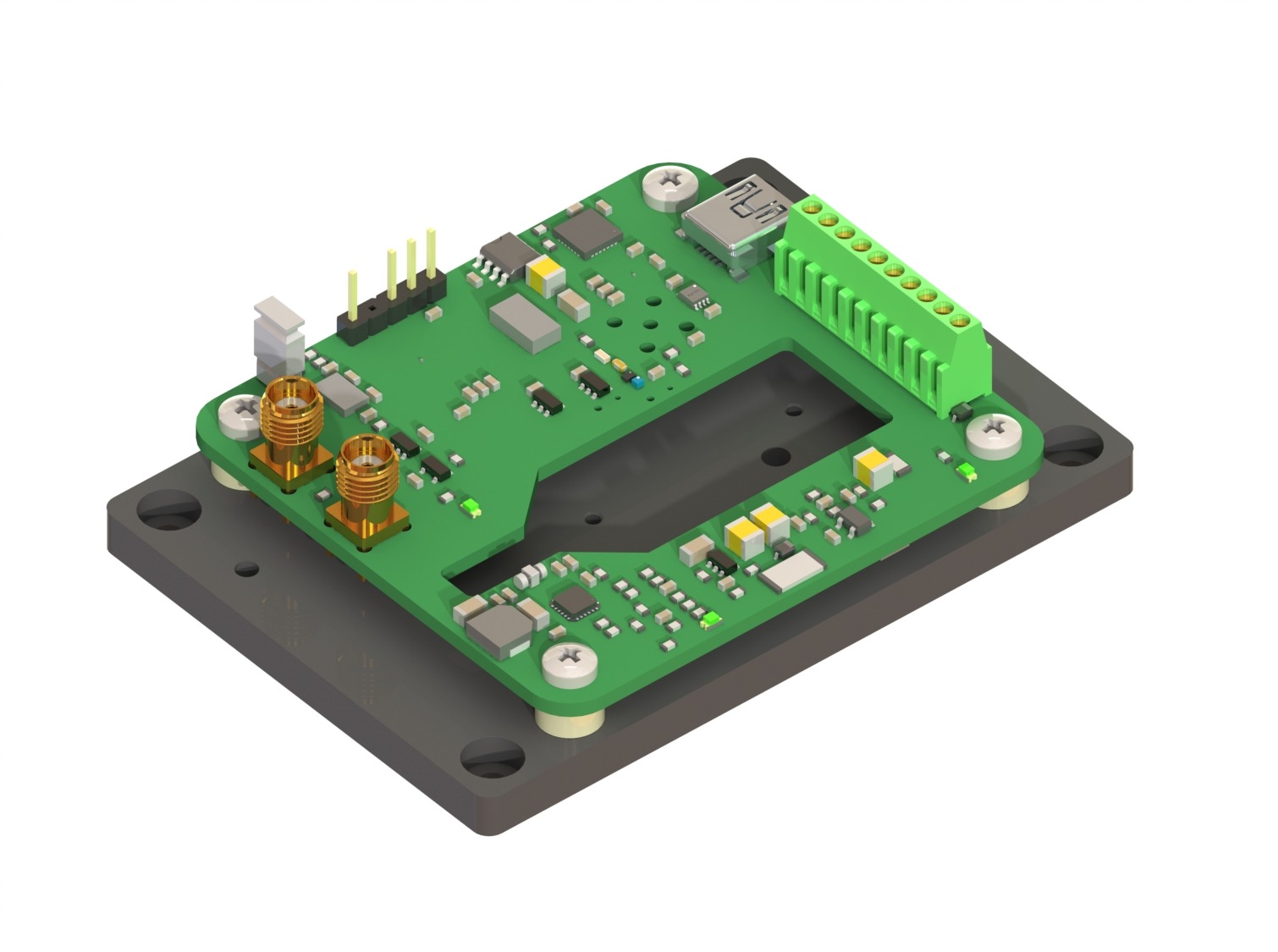
Laser Diode
Light is fast. But controlling it? That’s where true expertise matters. Imagine a laser diode delivering incredible precision one moment and faltering the next — because its current wasn’t properly managed. That’s why the laser diode driver isn’t just an accessory; it’s the heartbeat of any high-performance optical system. Without it, your diode could underperform, drift, or even fail — no matter how sophisticated the laser itself.
What makes a laser diode driver crucial
A laser diode driver (LDD) is more than a current regulator. It’s a finely tuned electronic system that ensures your diode operates safely, consistently, and efficiently. By maintaining precise current levels, it prevents instability or damage, giving engineers and researchers predictable performance every time.
The laser diode driver serves multiple functions:
- Constant current operation ensures smooth, continuous output — ideal for fiber optic communication, spectroscopy, and measurement systems.
- Pulsed operation supports nanosecond and picosecond applications, like LIDAR, distributed temperature sensing, and gain switching in advanced photonics research.
- Integration with fiber-coupled modules allows seamless installation into complex optical setups.
Each of these features may sound technical, but the impact is simple: better accuracy, enhanced reliability, and smoother integration into your project.
Applications that depend on precision
Laser diode drivers are everywhere you might not notice — powering critical systems across research, industry, and medicine. Consider:
- Laboratory R&D: researchers rely on LDDs to test, calibrate, and innovate. The ability to generate controlled pulses or constant output makes them indispensable for experiments in photonics, quantum optics, and material studies.
- Medical Devices: precision isn’t optional here. Laser-based surgery, diagnostics, and therapies demand accurate pulse duration and intensity, and a high-quality driver guarantees safe, effective operation.
- Industrial Modules: in fiber-coupled setups, pre-assembled LDDs simplify system integration, whether for optical amplifiers, sensor modules, or material processing lasers.
The takeaway is clear: wherever reliability, precision, or repeatable performance matters, a laser diode driver is the unsung hero.
Types and features of laser diode drivers
Modern LDDs come in a variety of forms to meet specialized needs:
- Universal LDDs: Flexible, compact, and adaptable to multiple laser types.
- High-power LDDs: Maintain stability under demanding outputs.
- Nanosecond & Picosecond LDDs: Tailored for pulsed applications requiring extreme temporal precision.
Key features include:
- Integrated TEC and current control: Ensures stable temperature and consistent output.
- User-friendly software: Graphical interfaces, LabView, or Python libraries simplify control.
- Multiple connectivity options: USB, RS-232, CAN, UART for versatile integration.
- Ready-to-use fiber-coupled modules: Easy assembly and seamless system integration.
These features make the LDD not just a component, but a complete solution for demanding optical setups.
Why custom solutions matter
Innolume provides solutions that go beyond standard offerings. Each device can be tailored in wavelength, output power, and pulse specifications to meet specific project requirements. With over twenty years of expertise in quantum dot and semiconductor lasers, every driver solution is engineered for stability, reliability, and long-term performance. Supported by in-house R&D and full production capabilities, these solutions ensure that laser systems operate at their highest potential rather than merely functioning.
Take control of your light
Precision is critical in every application involving laser diodes. Innolume’s custom laser diode drivers are engineered for performance and reliability, providing complete control over each photon. Designed for research, medical devices, and industrial systems, these drivers transform standard diodes into high-performance optical tools, unlocking the full potential of laser technology.
About the Author