Turnovers
Apartment turnovers are one of the most time-sensitive responsibilities in property management. Once a unit becomes vacant, the clock starts ticking. Cleaning, repairs, repainting, flooring replacement, and inspections often need to happen within a narrow window before the next tenant moves in. During this compressed timeline, waste management becomes a logistical factor that directly affects how quickly a unit can be restored to market-ready condition.
Temporary waste solutions are frequently used during apartment turnovers to streamline cleanup and reduce operational friction. For property managers and landlords overseeing multiple units, structured disposal planning can significantly improve efficiency across an entire portfolio.
The Waste Volume of a Typical Turnover
Even routine turnovers generate more debris than many anticipate. Discarded furniture, damaged fixtures, carpet removal, drywall repairs, and packaging from replacement materials all add up quickly. In more challenging situations, abandoned belongings or neglected interiors can multiply the cleanup workload.
Relying solely on standard curbside waste service is rarely sufficient. Municipal pickup schedules and volume restrictions often cannot accommodate the surge of debris created during a concentrated turnover period.
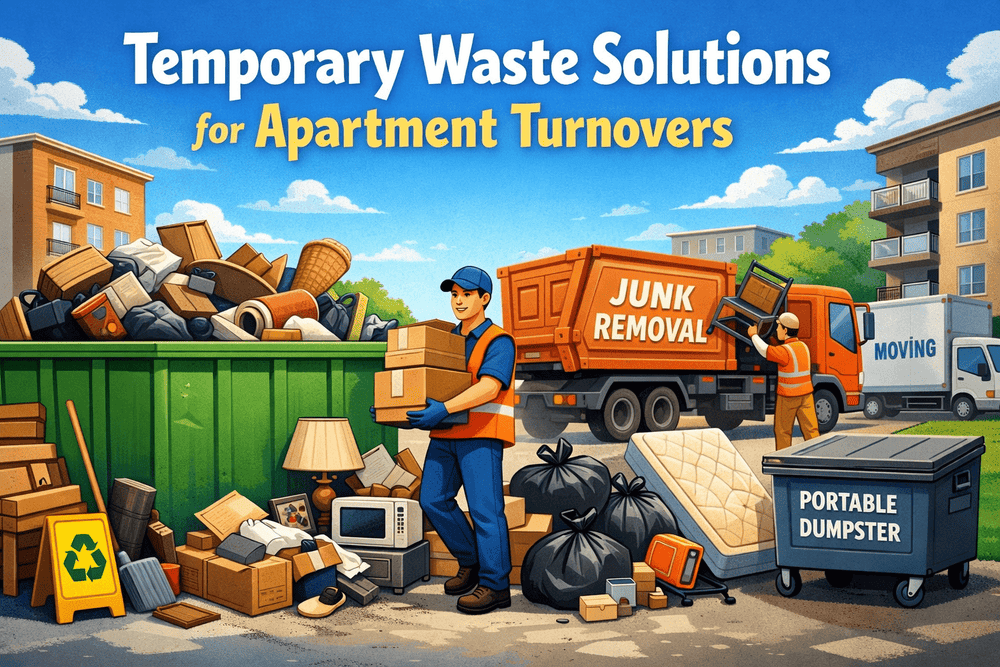
Temporary waste containment allows teams to remove items continuously rather than staging piles inside the unit or around common areas.
Aligning Disposal with Tight Turnover Timelines
Time efficiency is central to profitable property management. Every additional day a unit remains offline represents lost revenue. Waste removal must keep pace with cleaning and repair crews so that no phase stalls due to clutter or limited disposal capacity.
Temporary solutions are typically scheduled to coincide with the initial cleanout phase. Containers are delivered before removal work begins and picked up once debris-intensive tasks conclude. This alignment helps prevent bottlenecks between demolition, maintenance, and finishing teams.
For managers overseeing multiple simultaneous turnovers, predictable disposal scheduling supports smoother coordination across units.
Managing Common Areas and Shared Spaces
Apartment turnovers often occur within multifamily buildings where hallways, parking lots, and shared entry points must remain accessible. Debris staged in common areas can create safety concerns and inconvenience other residents.
Centralized waste containment reduces the need to temporarily store discarded items in hallways or near entrances. Careful placement planning ensures containers are accessible to maintenance teams without blocking tenant traffic or violating property rules.
This balance is particularly important in higher-density communities where visibility and resident experience matter.
Handling Mixed Materials Efficiently
Turnover debris is rarely uniform. Materials may include old appliances, broken cabinetry, flooring, fixtures, and personal property left behind by former tenants. Some items are bulky but lightweight, while others are dense and heavy.
Planning disposal capacity based on both volume and weight helps prevent mid-cleanout disruptions. Property managers often work closely with maintenance supervisors or contractors to estimate debris output accurately before scheduling waste solutions.
When disposal is planned proactively, cleanup progresses more predictably.
Coordinating Vendors and Maintenance Teams
Turnovers often involve multiple vendors working in sequence: cleaning crews, painters, flooring installers, plumbers, and electricians. Waste must be removed promptly so that one team’s debris does not delay the next.
Temporary waste solutions create a clear system for debris flow. Teams remove materials directly to designated containment rather than moving them multiple times within the unit. This reduces redundant handling and speeds overall progress.
In practice, property managers may coordinate with providers such as Waste Removal USA alongside regional haulers to align container delivery and pickup with turnover schedules. In these scenarios, scheduling reliability and responsiveness are often the primary considerations.
Reducing Liability and Safety Concerns
Debris left unattended can create trip hazards, sharp edges, and blocked exits. During turnovers, maintenance personnel and contractors move frequently between rooms, increasing exposure to potential risks if waste is not contained.
Structured waste handling reduces these hazards and supports a safer working environment. It also helps properties remain inspection-ready throughout the turnover process.
Supporting Portfolio-Wide Efficiency
For landlords managing multiple buildings or larger apartment communities, consistency is critical. Establishing a standardized approach to turnover waste removal reduces decision-making time and streamlines coordination with vendors.
When disposal logistics are predictable, property managers can focus on leasing timelines, inspections, and resident communication rather than reacting to overflow or missed pickups.
Apartment turnovers are inherently fast-paced, and efficient waste handling plays a meaningful role in meeting deadlines. Temporary waste solutions provide the flexibility needed to manage concentrated debris while keeping common areas clear and maintenance teams productive.
By integrating disposal planning into the broader turnover workflow, property managers and landlords can shorten vacancy periods, reduce operational friction, and maintain professional property standards across their units.
About the Author