Software
Before the right system is in place, a coaching business often runs on tiny interruptions. A client needs a link resent. A package invoice is still unpaid. A discovery call gets booked in one place, the contract sits in another, and notes live somewhere else again. By the end of the week, the work that was supposed to support coaching starts swallowing it.
That is exactly why more coaches are looking at all-in-one coaching software rather than stacking separate tools. HoneyBook, Paperbell, and Simply.Coach all market themselves around this same pain point: too much switching, too much admin, and too many parts of the client journey living in different places.
After the switch, the biggest difference is rarely dramatic on the surface. It is quieter than that. Booking, contracts, reminders, invoices, notes, and follow-up begin to feel connected. A platform such as Simply.Coach coaching software is explicitly positioned as a way to simplify the day-to-day administrative side of a coaching practice so coaches can focus on client outcomes, while Paperbell makes a similar promise through scheduling, payments, messaging, and contracts in one place.
Where Coaches Usually Lose Time
Admin does not usually arrive as one giant problem. It arrives in fragments.
A coach checks whether a client signed the contract. Then checks whether the invoice went out. Then resends a booking link. Then answers a message about rescheduling. Then copies notes into a second place because the first tool was not built for that part of the workflow. HoneyBook’s life coach software page describes the problem directly as switching tools for every task, while Paperbell’s scheduling page describes the same thing through endless emails, changing schedules, and booking confusion.
That fragmentation is where the time goes. Not in coaching itself, but in the repeated handoffs between systems that were never designed to work together cleanly. Simply.Coach’s client-management and solopreneur pages, for example, highlight booking pages, survey forms, invoicing, payment reminders, and centralized tracking because those are exactly the repetitive tasks coaches keep doing manually when the stack is too scattered.
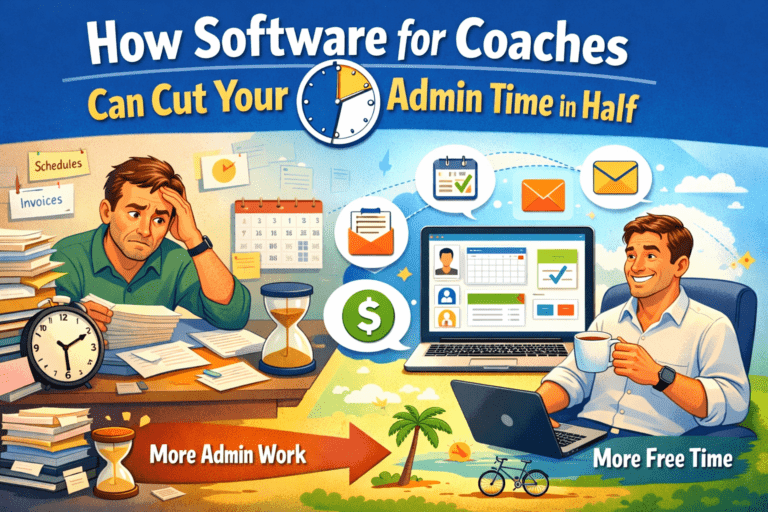
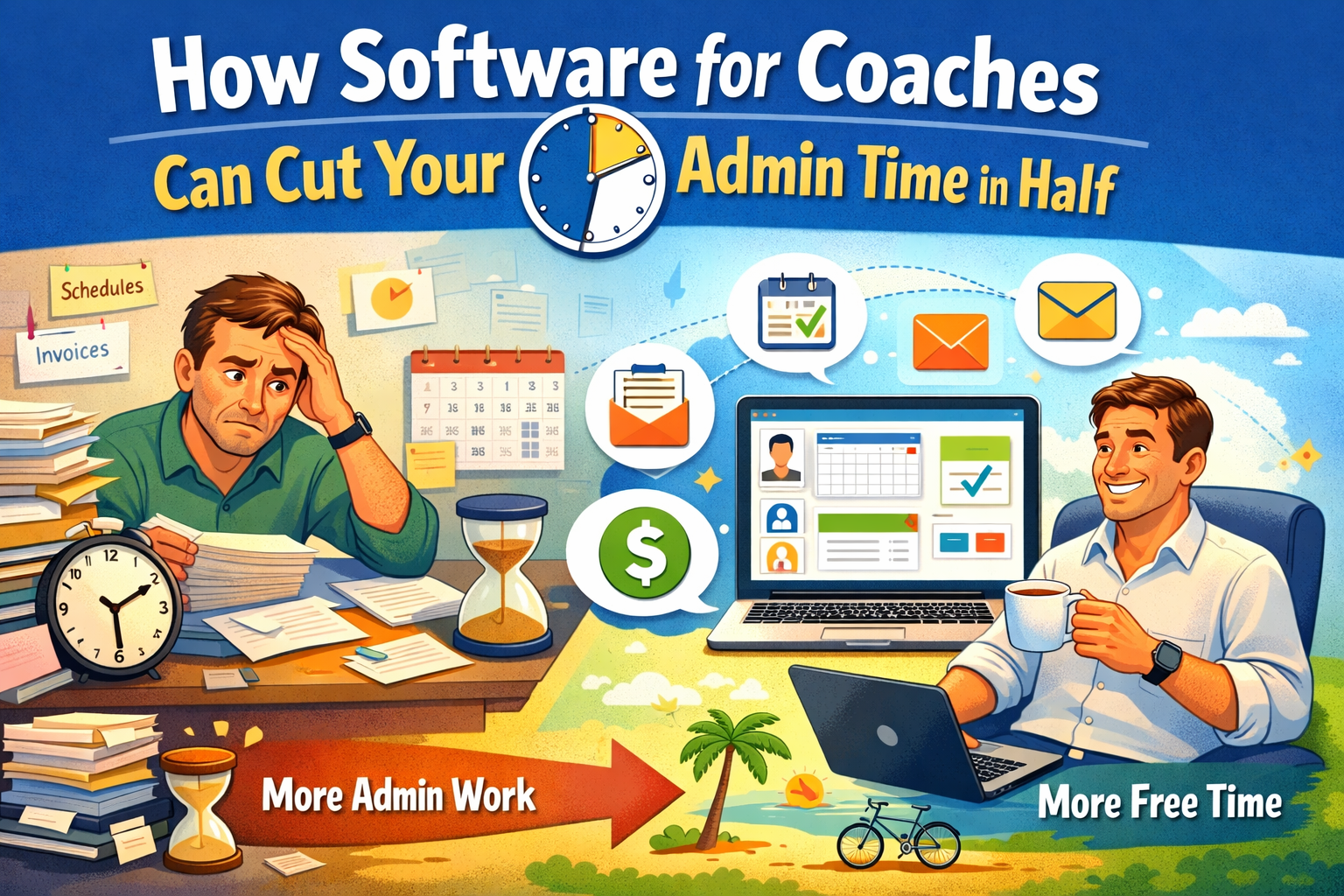
Before: The Patchwork Business Model
A lot of coaching businesses start the same way. One tool for scheduling. One for payments. One for contracts. Another for intake forms. Notes perhaps in a document folder. Messages in email. It works well enough in the beginning because the client volume is still small.
The problem shows up later. You are no longer running one or two sessions a week. You are running a pattern. And the pattern keeps forcing you back into admin mode.
Paperbell’s own coaching software page leans into this exact before-state by saying coaches used to rely on separate services for appointments, contracts, and billing before moving them into one place. HoneyBook says much the same from a clientflow angle, promising communication, scheduling, online contracts, and billing from one central hub.
The coach ends up becoming the bridge between apps. That is the hidden cost. Not just money spent on multiple subscriptions, but attention spent remembering where everything lives.
After: The Practice Starts Running in One Direction
The change with an all-in-one platform is not that every business suddenly becomes elegant overnight. It is that fewer simple tasks require human rescue.
A client books and sees the right next step. A contract is attached to the flow. A payment reminder does not need to be sent manually. Notes, forms, and client context are easier to locate because they are not scattered.
Simply.Coach describes this as a seamless client-management process in which the “nitty-gritty” of business operations is handled in one environment. Paperbell describes its platform similarly, offering scheduling, billing, contract signing, messaging, surveys, and client management in one place.
This is where the feeling of “cutting admin time in half” really comes from. Not from one magical automation, but from removing the repeated need to jump across systems for ordinary coaching work.
The Biggest Time Saver Is Not What Most Coaches Think
Many people assume the biggest win is scheduling. Scheduling helps, but the real gain usually comes from what surrounds it.
Booking alone does not solve the follow-up, the invoice, the signed agreement, the survey response, or the recurring session logic. That is why platforms built around connected workflows tend to feel more useful than single-purpose tools.
Simply.Coach’s pricing and solopreneur pages combine one-to-one coaching, group coaching, booking pages, forms, programs, invoicing, centralized invoice tracking, and automated payment reminders. Paperbell combines scheduling with payments, contracts, messaging, files, surveys, and a client portal.
Admin shrinks fastest when the full sequence is handled in one place:
book, sign, pay, attend, follow up, repeat.
Why This Matters Even More for Solo Coaches
A larger business can sometimes hide inefficiency with staff. A solo coach cannot.
If you are the person selling the package, running the call, answering the messages, chasing the payment, and rescheduling the session, every extra step costs more than it looks like on paper. That is one reason Paperbell’s product language is so aggressively simple and why Simply.Coach has a distinct solopreneur track in its pricing and feature setup. Both platforms are clearly responding to the same market truth: solo operators feel admin drag earlier and harder than larger teams do.
The practical effect is straightforward. The fewer systems a solo coach has to remember and maintain, the more mental room there is for delivery, follow-through, and business growth.
Where Simply.Coach Stands Out in This Shift
Every all-in-one platform defines “all-in-one” differently. Some mean simpler business admin. Some mean broader content and course delivery. Simply.Coach stands out because its public positioning tries to cover both business operations and coaching delivery. Its pages refer not only to invoicing and booking, but also to group coaching, programs, survey forms, recurring sessions, client management, nudges, and, at higher levels, multi-coach business support.
That wider setup matters for coaches whose admin burden does not come only from payments and scheduling. It matters when the business also involves programs, repeated journeys, or a more layered coaching model than simple one-off appointments.
The Mental Load Reduction Is the Real Win
The part coaches talk about less often is the mental relief.
An all-in-one platform does not just save clicks. It reduces the number of things you have to hold in your head:
Who has paid?
Who signed?
Which program are they in?
Did the form come back?
Was the reminder sent?
Where is that note?
Which calendar holds this session?
That is the operational weight these platforms are really trying to remove. Paperbell’s product pages talk about no longer needing Calendly plus DocuSign plus checkout. HoneyBook talks about centralizing leads, clients, projects, and payments. Simply.Coach talks about having all the administrative side of the practice taken care of so coaches can focus on results. Different wording, same commercial truth.
When an All-in-One Platform Will Not Help Much
It is worth saying clearly: software does not fix a weak offer, unclear boundaries, or a poor client experience.
If the business is disorganized because the service itself is undefined, the platform will only tidy the edges. The best results come when the coach already knows how the client journey should work and wants the system to stop making that journey harder to deliver.
So the right question is not “Which tool has the most features?”
It is “Which tool removes the most repeated admin from the way I already work?”
Final Thoughts
Coaches are moving to all-in-one platforms because separate tools stop feeling flexible after a while and start feeling expensive in a different currency: attention.
The strongest platforms are winning because they reduce the boring repetition that quietly eats into client time. Scheduling gets cleaner. Payments move faster. Contracts stop floating around. Forms and notes are easier to retrieve. A coaching business still requires effort, but less of that effort gets wasted on stitching systems together. That is the shift behind the promise that software for coaches can cut admin time in half. It is not hype when the software actually removes half the handoffs.
FAQs
How does coaching software actually reduce admin time?
It reduces the repeated switching between separate tools for booking, contracts, payments, forms, reminders, and client management. Platforms like HoneyBook, Paperbell, and Simply.Coach all market themselves around centralizing more of that workflow.
What admin tasks are easiest to automate first?
Scheduling, reminders, invoicing, payment follow-up, and form collection are usually the quickest wins. Simply.Coach’s solopreneur pages explicitly highlight booking pages, invoice creation, centralized tracking, and automated payment reminders.
Is an all-in-one platform always better than separate tools?
Not always. It works best when the platform matches the way your coaching business is structured. For solo coaches, Paperbell often appeals because of simplicity. For broader coaching operations, Simply.Coach may fit better because it also includes programs, group coaching, and recurring sessions.
Why do solo coaches feel the benefit faster?
Because they carry more of the admin themselves. There is no team member absorbing the friction. That is why both Paperbell and Simply.Coach market directly to solopreneurs with simplified admin promises.
What is the biggest sign a coach has outgrown a patchwork tool stack?
A strong sign is when the coach becomes the manual link between systems — resending links, checking payment status, confirming contracts, and pulling context from multiple places before one session. That is exactly the pain point all-in-one platforms keep targeting in their official product messaging.
About the Author