Contact Center
As businesses strive for competitive advantage, efficient communication channels become crucial, especially for customer engagement. Increasingly, companies are relying on contact centers to deliver superior service and support. Contact center solutions can significantly impact customer satisfaction and operational agility, reflecting directly on a business’s bottom line.
The right solution should streamline interactions, optimize customer experiences, and contribute to growth. In this article, we’ll dive into the essentials of selecting the best contact center solutions for your business needs.
Evaluating Contact Center Solutions for Business Efficiency
When assessing contact center solutions, the focus should be on how they bolster business efficiency. An ideal solution reduces response times and increases resolution rates, directly benefiting customer satisfaction. tips to create a contact center Look for systems that offer advanced call routing, efficient handling of inquiries, and streamlined communication processes.
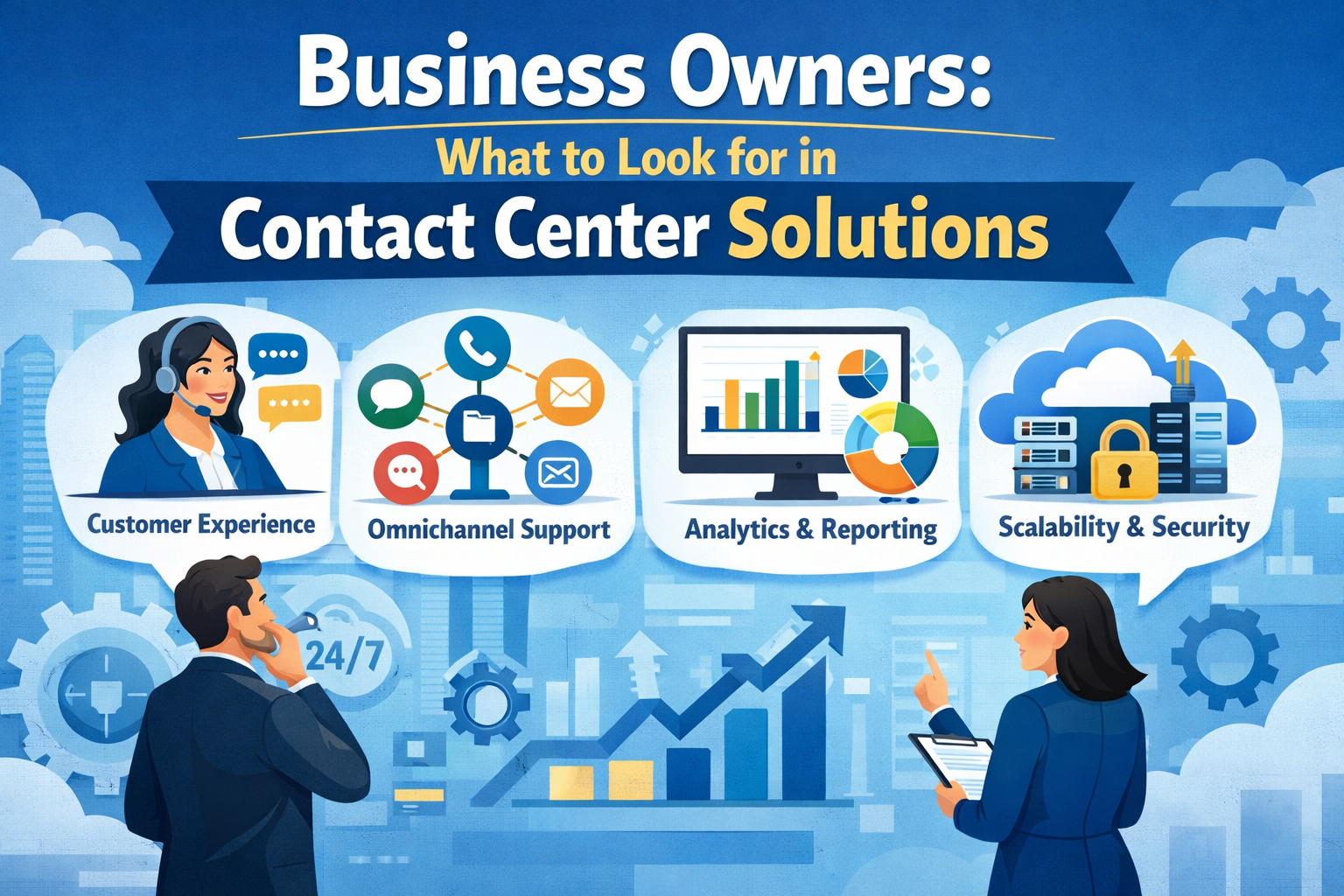
Reporting and analytics capabilities are a cornerstone of any robust contact center solution. Providers that deliver detailed performance metrics enable businesses to identify areas for improvement and ensure their teams are performing optimally. This data is invaluable for making informed decisions that affect resource allocation and strategy development.
Implementation should be straightforward, minimizing disruption to existing operations. Investigate a provider’s track record for successful integrations and support services. If a contact center solution is difficult to adopt or it requires extensive training, it may be an impediment to efficiency rather than an enhancement.
Key Features that Enhance Customer Experience in Contact Centers
Providing a stellar customer experience is reliant on the functionalities available through your contact center solution. Features such as interactive voice response (IVR), omnichannel support, and artificial intelligence-driven assistance are becoming industry standards. These tools can significantly elevate the level of service offered to customers.
Personalization capabilities also play a pivotal role in customer experience. Solutions that leverage customer data to deliver tailored experiences reflect positively on customer loyalty and retention. For example, integrating CRM systems allows for a seamless transition of customer information to the support agent, facilitating a more personalized conversation.
Research thoroughly and select features that align with your customer service goals. Often, it’s beneficial to pilot a solution with a segment of your customer base to gauge its effectiveness before rolling it out company-wide. Ensure that the chosen solution is compatible with your business’s unique operational requirements and customer expectations.
Integrating Contact Center Solutions with Business Infrastructure
Seamless integration is key when incorporating a new contact center solution into your business infrastructure. The software should work in tandem with existing tools and workflows, enhancing productivity rather than hindering it. Always consider the compatibility of the new system with the current technological ecosystem of your company.
Data continuity and security are paramount when merging systems. A contact center solution that prioritizes data encryption, compliant with industry standards like GDPR, adds a layer of trust and security for both the company and its clientele. Such features ensure that as your business leverages new technology, it also protects sensitive information.
Ask potential providers about integration support and ongoing technical assistance. It’s also worth considering the application programming interfaces (APIs) that the solution offers, as they are crucial for custom integrations and future-proofing the technology within the broader business framework. Cohesive digital strategy is vital, and your contact center solution should contribute to this end.
Assessing the Scalability of Contact Center Solutions for Growing Businesses
Growth-oriented businesses need contact center solutions that can expand alongside their evolving demands. Scalability is an essential attribute, ensuring that as your business grows, your customer service capabilities can keep pace without the need for constant restructuring.
Inquire about the flexibility of adding new channels, users, and features as your business scales. This could range from accommodating increasing call volumes to integrating additional communication platforms or incorporating new languages for global expansion. Such adaptability ensures longevity and return on investment for the solution you choose.
Future-proofing your contact center also involves considering cloud-based solutions that offer easy updates and enhancements. Many cloud services provide pay-as-you-go models, which could be beneficial for businesses that experience fluctuating customer engagement levels. Minimizing the fixed costs of your contact center technology can be a strategic approach to managing growth effectively.
Ultimately, the selection of a contact center solution should be a careful balance between immediate needs and future goals. By focusing on efficiency, customer experience, integration, and scalability, businesses can select a contact center solution that supports their objectives and adapts to their growth trajectory. With the right choice, companies can ensure that their customer service remains a competitive differentiator and a cornerstone of their long-term success.
About the Author