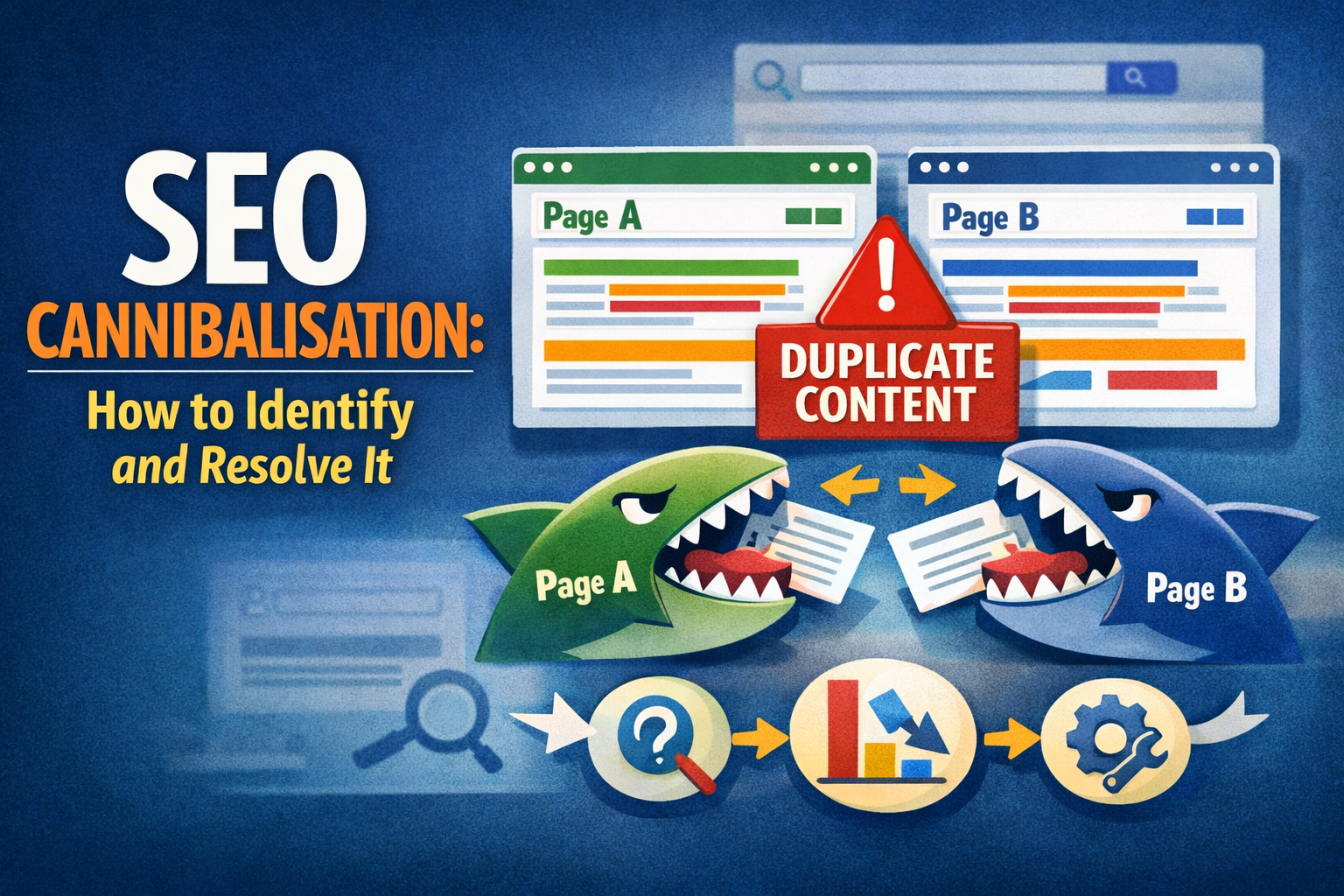
As websites grow and content libraries expand, many businesses unknowingly create a structural SEO issue that limits their organic performance. Known as SEO cannibalisation, this problem occurs when multiple pages compete for the same or very similar search queries, confusing search engines and weakening ranking potential.
SEO cannibalisation is especially common on established websites, service-based businesses, and content-heavy platforms. For organisations investing in SEO—particularly in competitive markets like Singapore—addressing cannibalisation is essential to maintaining clarity, relevance, and sustainable rankings.
This article explains what SEO cannibalisation is, why it happens, how to identify it, and the most effective ways to resolve it.
What Is SEO Cannibalisation?
SEO cannibalisation occurs when two or more pages on the same website target the same keyword or search intent. Instead of reinforcing one strong ranking page, these pages compete against each other in search results.
As a result, search engines may:
- Struggle to determine which page is most relevant
- Alternate rankings between pages
- Rank neither page as strongly as they otherwise could
Contrary to common belief, SEO cannibalisation is not about duplicate content alone. It often affects well-written, unique pages that overlap in intent or optimisation focus.
Why SEO Cannibalisation Is a Problem
SEO cannibalisation can have several negative consequences for organic performance.
Diluted Ranking Signals
When multiple pages target the same query, internal signals such as backlinks, internal links, and relevance are split. Instead of one authoritative page, ranking equity is spread across several weaker pages.
Unstable Rankings
Cannibalised pages may fluctuate frequently in search results. This instability makes it difficult to maintain consistent visibility and measure SEO performance accurately.
Lower Click-Through Rates
Search engines may rank a less suitable page for a query, leading to lower engagement. This mismatch between search intent and page content can reduce click-through rates and conversions.
Inefficient Crawling and Indexing
SEO cannibalisation can waste crawl budget, particularly on large websites. Search engines may repeatedly crawl similar pages instead of prioritising more valuable content.
Common Causes of SEO Cannibalisation
Understanding how cannibalisation occurs is the first step towards preventing it.
Overlapping Blog Content
Publishing multiple articles that target similar keywords without a clear content hierarchy is a common cause. Over time, this can lead to several posts competing for the same queries.
Similar Service or Location Pages
Service-based businesses often create multiple pages for similar offerings or locations. Without careful differentiation, these pages can overlap in intent and optimisation.
Poor Keyword Mapping
SEO cannibalisation frequently results from a lack of keyword mapping. When keywords are not assigned deliberately to specific pages, overlap becomes inevitable.
Legacy or Outdated Pages
Older pages that were once relevant may continue to compete with newer content if they are not consolidated or updated appropriately.
How to Identify SEO Cannibalisation
Identifying SEO cannibalisation requires a combination of data analysis and strategic review.
Analyse Keyword Rankings
One of the clearest signals of cannibalisation is when multiple URLs rank for the same keyword. This can often be observed through ranking tools or search console data.
Look for:
- Keywords triggering multiple URLs
- Ranking fluctuations between similar pages
- Declining performance across all competing pages
Review Search Intent Alignment
Even if keywords differ slightly, pages may still compete if they serve the same search intent. Reviewing page content and intent alignment helps uncover less obvious cases of cannibalisation.
Conduct a Content Audit
A structured content audit allows businesses to identify:
- Pages covering similar topics
- Thin or overlapping content
- Pages with unclear purpose or differentiation
This process is especially important for websites that have grown organically over time.
How to Resolve SEO Cannibalisation
Resolving SEO cannibalisation does not always require deleting content. The most effective approach depends on the nature of the overlap and the performance of the affected pages.
Consolidate Content
When multiple pages serve the same intent, consolidation is often the most effective solution. This involves merging content into a single, more comprehensive page and redirecting redundant URLs.
Consolidation strengthens relevance, improves authority, and simplifies site structure.
Re-Optimise for Distinct Search Intent
In some cases, pages can coexist if they are clearly differentiated. This requires:
- Adjusting keyword targeting
- Refining headings and metadata
- Clarifying intent and purpose
For example, one page may target informational queries while another focuses on transactional intent.
Use Canonical Tags
Canonical tags can help signal the preferred version of a page when similar content must exist. While not a standalone solution, canonicals support SEO cannibalisation management in specific scenarios.
Improve Internal Linking Structure
Internal links play a critical role in reinforcing content hierarchy. Linking strategically to the preferred page helps search engines understand which URL should rank.
Clear internal linking also improves user navigation and crawl efficiency.
Preventing SEO Cannibalisation in the Future
Prevention is an important part of long-term SEO management.
Implement Keyword Mapping
Assigning specific keywords and intents to individual pages reduces the risk of overlap. Keyword mapping ensures each page has a defined role within the website.
Establish Content Governance
Clear content guidelines help maintain consistency as websites grow. This includes processes for content creation, updates, and retirement.
Regular SEO Audits
Periodic audits help detect early signs of cannibalisation before performance is affected. This is particularly important for businesses publishing content frequently.
SEO Cannibalisation in Competitive Markets Like Singapore
In competitive digital environments, small inefficiencies can have amplified effects. SEO cannibalisation may prevent websites from competing effectively for high-value keywords, especially when competing against well-structured competitors.
For businesses in Singapore targeting both local and international audiences, resolving cannibalisation improves clarity and strengthens overall SEO performance.
Conclusion
SEO cannibalisation is a common but often overlooked issue that can limit organic growth. By identifying overlapping pages, clarifying search intent, and reinforcing content hierarchy, businesses can improve rankings, stability, and long-term SEO performance.
Addressing SEO cannibalisation is not about reducing content—it is about ensuring every page has a clear purpose and contributes meaningfully to the overall SEO strategy.
If your website has grown over time and you suspect SEO cannibalisation is affecting performance, working with a digital marketing agency in Singapore that specialises in SEO audits and optimisation can help you identify overlaps and restore ranking clarity.